
Why Creatine Matters More Than Ever After 40
Karen Park4 min read
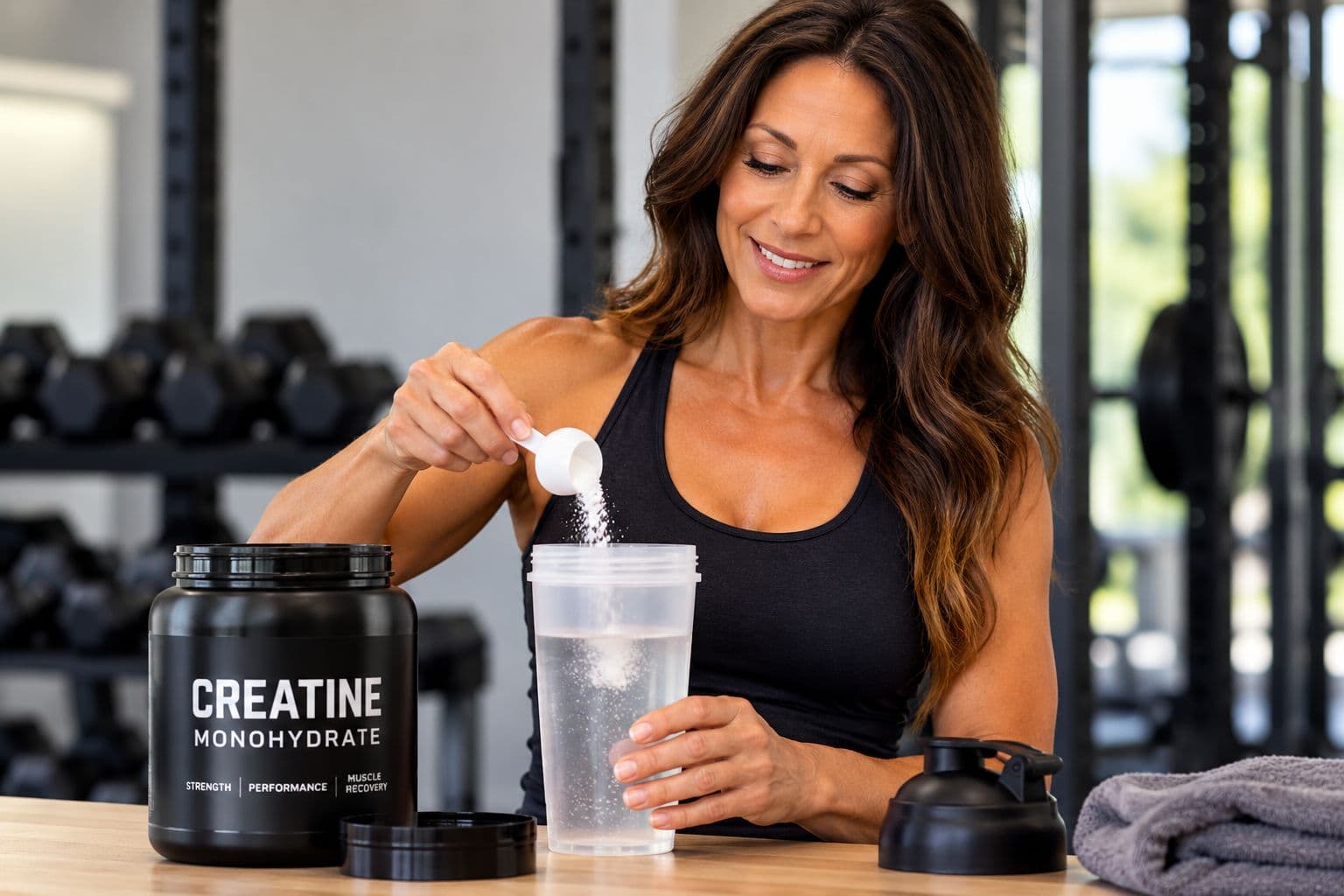
If you’re over 40 and focused on staying strong, energized, active, and healthy as you age, there’s one supplement worth paying attention to: creatine.
Creatine has been studied for decades, particularly for its ability to support strength, power, and exercise performance. But its benefits aren’t limited to athletes or people trying to build bigger muscles. As we get older, maintaining muscle and physical function becomes increasingly important—and that’s where creatine can become a valuable part of a well-rounded fitness routine.
Your Body Changes After 40
Starting in midlife, we gradually become more susceptible to losing muscle mass and strength if we aren’t actively working to maintain them. This process can accelerate with inactivity.
That matters because muscle isn’t just about appearance.
Strong muscles support your bones, balance, mobility, independence, metabolism, and ability to perform everyday activities. The goal of fitness after 40 isn’t simply to look good—it’s to remain capable and strong for decades to come.
That’s why resistance training becomes so important, and why creatine deserves a closer look.
So, What Exactly Is Creatine?
Creatine is a naturally occurring compound found primarily in muscle tissue. Your body produces some creatine on its own, and you also obtain it through foods such as meat and fish.
Its primary role is helping your muscles rapidly regenerate ATP, the energy source your cells use during short bursts of high-intensity activity.
Supplementing with creatine increases the amount of creatine stored in your muscles, which can help support performance during activities such as strength training, sprinting, and other high-intensity exercise.
Creatine + Strength Training = A Powerful Combination
One of the most well-established benefits of creatine supplementation is improved ability to perform high-intensity exercise and, when combined with resistance training, support increases in strength and lean muscle mass.
For adults over 40, this is particularly relevant.
You don’t need to be trying to become a bodybuilder. You might simply want to:
• Maintain your strength
• Preserve lean muscle as you age
• Improve your workouts
• Recover and train consistently
• Maintain mobility and physical independence
• Continue doing the activities you love
Strength is one of the best investments you can make in your future self.
What About Women Over 40?
Absolutely.
Creatine isn’t a “men’s supplement.”
Women can also benefit from creatine supplementation, particularly when it is combined with resistance training and adequate nutrition.
For women in midlife and beyond, maintaining muscle and strength is especially important because changes in hormones, activity levels, and body composition can make preserving lean tissue more challenging.
Creatine can be one piece of that bigger picture.
Creatine Isn’t Just About Muscle
Researchers are also studying creatine’s potential effects beyond physical performance, including areas such as cognitive function and brain energy metabolism.
Some studies suggest there may be cognitive benefits in certain populations, although the evidence is not as definitive as it is for exercise performance and strength.
That’s an important distinction: creatine’s strongest evidence is currently for exercise performance, strength, and muscle-related outcomes.
But the research into its broader potential is interesting—and ongoing.
How Much Creatine Do You Need?
For most healthy adults who choose to supplement, creatine monohydrate is the form with the strongest evidence behind it.
A commonly studied maintenance dose is:
3–5 grams per day
You don’t necessarily need to “cycle” creatine, and taking it consistently is generally more important than taking it at a particular time of day.
A loading phase—taking a larger amount for several days—is optional and isn’t necessary for everyone.
And no, you don’t have to take it immediately after your workout for it to work.
Consistency wins.
What About Weight Gain?
This is one of the biggest concerns people have when they hear the word “creatine.”
Creatine can cause an increase in body weight, particularly during the first few weeks, because it increases water stored within muscle cells.
That’s not the same thing as gaining body fat.
For someone focused on maintaining a lean, strong physique, the increase in muscle-cell water can actually be part of the desired effect.
Is Creatine Safe?
For healthy adults, creatine monohydrate has a strong safety record when used appropriately.
However, supplements aren’t appropriate for everyone. If you have kidney disease, another significant medical condition, are pregnant or breastfeeding, or take medications that could affect kidney function or fluid balance, talk with your healthcare professional before starting creatine.
And remember: a supplement should complement—not replace—a good diet, resistance training, adequate protein, sleep, and regular physical activity.
The Bottom Line
Getting older doesn’t mean accepting becoming weaker.
In fact, your 40s, 50s, 60s, and beyond can be an incredibly important time to become intentional about strength, muscle, nutrition, and fitness.
Creatine isn’t a magic pill. But when paired with consistent resistance training and a nutritious diet, it can be a simple, well-studied tool to help support strength and physical performance.
Because the goal isn’t simply to add years to your life.
It’s to add strength, capability, confidence, and quality to those years.
Your future self is worth training for.
Keep reading

My Journey
Fit at 50 and Beyond: How I Transformed My Life and Empowered Others Through Fitness
My 50s have been the best decade of my life, hands down. As I approach 59, I can honestly say that I’ve experienced more personal and professional growth in these years than ever before, and I owe it all to fitness.…
Read more →
Mindset
Is it time? vs It’s about time!
So many adults play the Follow The Leader game the same as when we were kids. Although we know we are not making the best or healthiest decisions for ourselves, things always feel acceptable when our closest family…
Read more →
Nutrition
Top 10 Foods to Boost Your Immune System: Daily Superfoods
Top 10 foods that can boost your immune system include citrus fruits, garlic, ginger, spinach, yogurt, almonds, sunflower seeds, turmeric, green tea, and papaya. These foods are rich in essential vitamins,…
Read more →